
General Guidelines for Safer Sex
Did you know that 1 in 6 people in the U.S. have an STI? Did you know that there are over fifty known diseases that can be transmitted through sexual activity? Also, did you know that approximately 45 million people carry the genital herpes virus in America? These questions and many others just like them are the reason why this website would not be complete without giving a brief overview on Sexually Transmitted Infections (STIs). We do an awful lot of talking here about sex and different kinds of sexual play, but it’s time that we’ve given you the basic scoop on STI’s. Hey, the more you know the better able you are to make decisions about your sexual health. You will notice that some STIs have similar symptoms, so it would be to your benefit to never self diagnose. If you experience any of the symptoms listed throughout this article or even if you experience something that doesn’t seem right and you are sexually active, do not, I repeat, do not hesitate to see a doctor. The sooner you tackle some STI’s the better chance you have of getting rid of them. So let’s get started.
Please Note: The intention of this guide is to serve as a basic introduction to some common STD’s. Our medical and scientific community is always researching ways to cure, treat and prevent these illnesses. It is important that you visit the links within this article that go to reputable sites that will have the most up to date information available for you.
AIDS
Acquired Immunodeficiency Syndrome is a disease that came out of Africa in the early 1980′s. The virus that attacks your immune system is called the HIV or Human Immunodeficiency Virus It makes your body unable to fight off illnesses or any other dangerous bacteria. The HIV virus is transmitted when infected bodily fluids come into contact with open cuts, mucous membranes or sores. Unprotected oral, anal, vaginal sex and the sharing of blood (such as drug users sharing needles) is usually how it is transmitted. There are no immediate symptoms that would tell you that you have caught the HIV virus. The only way to really tell is to be tested, but you can’t be accurately tested for at least 6 months because the HIV antibodies can take that long to develop. The HIV virus can lay dormant in your body for up to 10 years. So, you should be tested yearly if you’ve had unprotected sex with someone you think is carrying the virus. Unfortunately, there is no real cure for AIDS. Researchers have come up with HIV remedies, called “protease inhibitors,” that may help a person live a little longer, but it does not cure the infected individual completely.
- For the most up to date information on HIV/AIDS please visit the AIDS and HIV Health Center on WebMD.com: https://www.webmd.com/hiv-aids/default.htm
Chlamydia
Chlamydia is one of the most widely spread STIs in America; approximately 4 million per year, in people ages 15 to 25. While symptoms are not always experienced until some complications arise, there are some, that if you experience them, you should get tested. Men may experience burning during urination, a discharge from the penis, tenderness and/or pain in the testicles or abdomen, fever and chills, a constant urge to urinate or difficultly urinating. As for women, they may experience burning during urination, a vaginal discharge that is different than what is normally experienced, pain during sex, a constant urge to urinate or difficultly urinating.
The good news is this infection is curable with antibiotics; although all sexual partners should be treated to avoid passing it back and forth. Usually a follow-up visit to your doctor within 3 or 4 weeks is required to make sure you’re cured. If left untreated or if treatment is not properly followed many complications can occur. Men can suffer from Epididymitis, which is an infection of the tubes that feed blood to the testicles. This is extremely painful and can ultimately result in sterility. Women can develop Pelvic Inflammatory Disease (PID), which can destroy the fallopian tubes. At this point, surgery may be needed and the woman may need to have a hysterectomy (removal of the ovaries and uterus). But even these complications: Epididymitis and PID can be cured with antibiotics as long as they’re caught early enough.
- For the most up to date information on Chlamydia, please visit WebMD.com: https://www.webmd.com/sexual-conditions/chlamydia
Crabs
These are tiny, crab shaped lice that take root in the pubic hair and live off human blood. These little buggers can be caught by sexual and even non sexual contact. It has also been known that a person giving oral sex can get crabs in their eyebrows and eyelashes. So it’s not just pubic hair that’s susceptible and condoms don’t protect you since they live in the pubic hair. The most well known symptom is that your crotch itches a lot and it won’t go away, no matter how much you scratch. One can easily get rid of them. You can get over the counter shampoo and a fine toothed comb to remove them or simply shave off that pubic hair and apply the lice killing cream. Just make sure you see a doctor before you take matters into your own hands.
- For the most up to date information on Crabs, please visit the Centers for Disease Control and Prevention:https://www.cdc.gov/lice/pubic/index.html
Genital Warts/HPV
One of the most contagious STI’s, Genital Warts are known as cauliflower shaped lesions on the genitals. They are the result of the transmission of the HPV virus through cracks in damaged skin. This virus is not curable. The only thing that can be done is to remove the warts, using liquid nitrogen, so that the virus doesn’t spread. It is estimated that 20 million Americans carry this virus. There are also many cases and strains of HPV that have no symptoms and many don’t even realize they have it. In recent years, there have been many new studies and preventive treatments for HPV, please visit the Centers for Disease Control and Prevention website to learn all you can about these new developments.
- For the most up to date information on Genital Warts/HPV, please visit the Centers for Disease Control and Prevention: https://www.cdc.gov/STI/HPV/default.htm
Gonorrhea
Gonorrhea, also known as “The Clap,” is another extremely contagious STI. It’s a bacterial infection that is more contagious to women and homosexual men. About 650,000 Americans are infected with Gonorrhea every year. Women may become infertile or experience an ectopic pregnancy (a fertilized egg develops in the fallopian tube instead of the uterus). Men may become sterile or develop septic arthritis (joints become filled with pus cells, very painful). As long as it’s caught right away, anitbiotics can cure one of this virus.
- The Centers for Disease Control and Prevention will have the most up to date information on this STI: https://www.cdc.gov/STI/Gonorrhea/
Herpes
By far, herpes is the most widely spread STI in America with an estimated 45 million people carrying it. Small blisters on the genitals are usually the main sign that you should get checked out. Herpes, oral and genital, is one of the most difficult viruses to control. This virus is not curable and can be contracted and/or transmitted from/by a partner who has no sores at the time of intercourse. Antiviral medications for genital herpes and antiviral creams for oral herpes can keep recurrences under control. If both partners avoid having sex during outbreaks and use condoms the rest of the time, will also help keep recurrences under control.
- The folks at WebMD.com have an entire Health Center chock full of up to date information about Herpes: https://www.webmd.com/genital-herpes/default.htm
Scabies
Scabies consists of small, parasitic mites that burrow under the skin living off human blood, laying eggs and depositing feces, making it the absolute itchiest of all STDs. Usually an intolerable itching and formation of scabs on or around the genitals is a sign to see a doctor. If caught early enough, creams can kill these little buggers before they get out of control. If not treated properly, they can reproduce uncontrollably and at that point, the scabs they leave are too thick for creams to penetrate.
- Please see the Centers for Disease Control and Prevention website for the most up to date information: https://www.cdc.gov/scabies/
Syphilis
Syphilis is a bacterial infection that shows its presents in the form of sores around the mouth and genitals. Syphilis can be easily treated with penicillin. If left untreated or improperly treated, it can lay
dormant in the lymph nodes for as long as 20 years. Recurrence can then be terminal, attacking the nervous system and the heart, resulting in insanity, blindness, numbness and death.
- For the most up to date information on Syphilis, please visit WebMD.com’s Sexual Health Center: https://www.webmd.com/sexual-conditions/syphilis
Trichomoniasis
Trichomoniasis, is caused by a microscopic organism, that almost looks like a jellyfish, and is transmitted through infected body fluids. Women who have contracted this STI will experience a very large amount of a greenish, frothy discharge with a very pungent, fishy smell. Men usually experience extremely pain and burning during urination. This organism is known to be a bit stronger than just a virus or bacteria, but the good news is that it can be cured with hefty doses of antibiotics. For a relatively unknown STD, approximately 5 million Americans are infected per year.
- For the most up to date information on Trichomoniasis, please visit the Centers for Disease Control and Prevention website: https://www.cdc.gov/STI/trichomonas/default.htm
General Guidelines for Safe Sex
So there’s absolutely nothing wrong in wanting to have a lot of sex or have sex with multiple partners. It’s just really important these days that you do it safely. Now you probably already know most of this stuff, but it doesn’t hurt to take a peek and make sure you’re doing everything you can to protect yourself and others. So, here we go:
For any kind of barrier to be most effective, they must be used CORRECTLY from start to finish. Check your barriers periodically to during play to make sure it’s okay. And keep them within easy reach, that way the moment won’t be ruined by the stopping to retrieve supplies.
Here some of the different types to barriers and sexual aids one may use.
Condoms
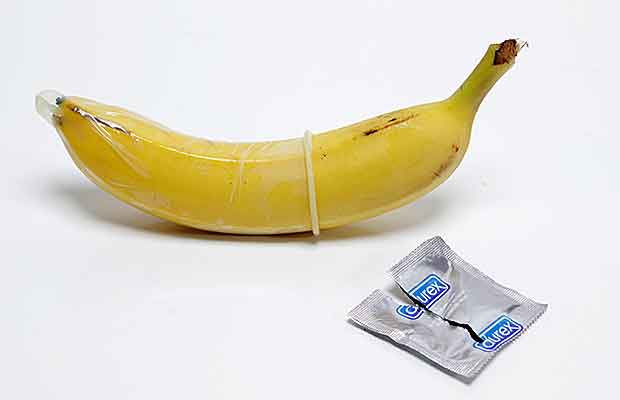
Use condoms for vaginal and anal intercourse and on the penis of the person who is receiving oral pleasure.
Use them on sex toys when more than one person will be sharing the toy for any type of penetration. Change the condom with each person that uses the toy. Also, change the condom on the toy when going from vagina to anus.
Use only latex condoms, any other substance will not provide the protection against the HIV virus and other viruses. Any natural substance made condoms, like lambskin, are too porous.
Never reuse a condom and avoid using them after the expiration date or 4 years past the manufacture date.
Store them in a cool, dry place. Do not keep them in your wallet, in the glove compartment of your car because the heat weakens the latex. Do not keep them loosely in your purse where keys or sharp objects can puncture.
Condoms come in a variation of sizes, even though the variation is slight, experiment to see which you like best. Maxx and Magnum make a larger condom. Kimono or Trojan Ultra Thin are known for their thinner condoms.
For use on the penis, use a condom with a reservoir tip and for a sex toy, a plain non reservoir tip is fine.
When putting a condom on a toy or penis, make sure you pinch the reservoir tip to get rid of any air in the tip and keeping this firm grasp, roll it down to the base of the penis or toy. This is to be sure all the air bubbles are out because a trapped air bubble can cause the condom to break. For the uncircumcised men, pull back the foreskin to prevent the condoms from slipping.
Putting a drop of lube inside the tip of the condom can enhance sensation for the wearer.
Use only a water-based lubricant on latex condoms. Any kind of oil, Vaseline or hand lotion will eat through the latex. Also, be aware of “water-soluble” lubes, which usually contain oil.
If you are going to ejaculate inside the condom while inside your partner, hold the base of the condom as you pull out.
Concerned about the condom slipping off? Try Mentors, a unique brand with a band of light adhesive inside.
Adding lubrication when using a condom during intercourse will help reduce friction that can cause breakage.
Dental Dams
These are pieces of latex that were originally used by dentists during dental procedures (not just a clever name!). They have been proven by sex educators to be useful as protection during oral/vaginal or oral/anal sex.
If you can’t find an actual dental dam, a cut-open latex glove works, too.
Add lubricant to the side opposite of the mouth to help increase sensation. And make sure you keep track of which side of the dam is whose; a little pen mark can help with this.
In order to free everyone’s hands and have more fun, we sell a Dam Garter which holds the dam in place.
One trick you can do if you can’t find a dam large enough is to use long sheets of kitchen plastic wrap. Now keep in mind that it has not been proven to protect from viruses and bacteria, but many sex educators believe it is effective. At least this is better than going without anything at all!
Latex Gloves or Finger Cots
These should be used for any type of hand or finger penetration of the vagina or anus.
Latex gloves are thin, resilient and transmit sensation and temperature wonderfully. They are perfect for smoothing out rough hands or nails with jagged edges, which is especially important for anal play. Check out our superstore for the many sizes of regular and hypoallergenic gloves!
Gloves make washing up between anal and vaginal play unnecessary. Just change those gloves!
Finger cots, which look like cute, little, mini condoms, are excellent barriers when only one finger is being used for penetration. They can also be used on small sex toys.
The Female Condom
The female condom is a soft, loose-fitting polyurethane sheath that lines the vagina. It has a soft ring on each end. The ring at the closed end is for putting the condom in place in the vaginal canal and to keep it there during sex. The other ring stays outside the vagina, covering the labia.
Since it is made out of polyurethane and not latex, oil-based lubricants can be used.
The male condom and the female condom do not work together. If you use both at the same time, there will be too much friction and one or both will come undone. Each one was made to work against skin.
When used correctly every time you have sex, the “Reality Condom” is estimated to be 95% effective.
As long as there is a good amount of lubrication on the penis and condom, the condom will not shift. If it does happen to shift and the outer ring goes inside the goes in the vaginal canal. Immediately stop, pull out the condom and insert an new one. Don’t just put it back in place.
The condom is basically inserted like a woman inserts a tampon, although if it’s going to be used as the main form of contraception, the woman should learn how to insert it before actually having sex. It is something you should know how to do before having sex. It is easy to insert if you read the enclosed instructions very carefully.
If you don’t want to rush putting the condom in right before sex, it can also be inserted up to 8 hours prior. How convenient!
Lubrication
Lubricants containing spermicide like nonoxynol-9 provide extra protection against viruses and bacteria. Be careful though some people are very sensitive to it. If so, try Nonoxynol-15. Don’t use spermicidal products in your mouth or anus.
Water-based lubes are best for use with latex barriers. So that you don’t have to taste the icky laxed, they are available in a variety of flavors.Sliquid and Wet are some of the more well-known manufacturers.
Silicone-based lubes are also okay to use with latex and are safe to the vagina as well. Another added benefit is that they work well underwater. Sliquid Silicone and Wet Platinum are two of the more popular brands.
Safe and Unsafe, Types of Sexual Play
45 million Americans carry Genital Herpes. 650,000 Americans have Gonorrhea. Some 20 million people have Genital Warts and 4 million Americans have Chlamydia. With these staggering statistics, one would think the safest sex to have would be to masturbate alone or abstain from sex altogether. Now, those are both two of the safest kinds of sex to have, but we are all humans and we all, to some extent, need to engage in sexual play with another human being. So, here is a brief list of safe and unsafe types of sexual play.
Totally Safe Play consists of massaging, hugging, mutual masturbation (as long as your touching your own genitals), kissing without exchanging saliva, dry humping, talking dirty, engaging in voyeurism, dirty dancing, phone sex, cyber sex, using sex toys (if sharing make sure you change condoms between uses), and showering together as long as you don’t exchange body fluids.
Somewhat Safe Play consists of French kissing, intercourse (vaginal or anal) with a condom, fisting with a glove, cunnilingus with a dental dam or other type of barrier, fellatio with a condom, rimming with latex barrier and any finger penetration (vaginal or anal) with a latex glove or finger cot.
Activities that would be considered Somewhat Unsafe Play would consist of cunnilingus without a barrier, any finger penetration (vaginal or anal) without a latex glove or finger cot, fellatio without a condom, sharing sex toys without cleaning them or changing condoms in between uses, fisting without a glove, rimming without a latex barrier and water sports (golden showers).
Activities that are definitely considered Unsafe Play would be any kind of intercourse (vaginal or anal) without a condom, any activity that would cause a person to bleed and cunnilingus during menstruation without a barrier.
Are you a sexually active person with many partners? Do you engage in all or many of these activities? Have you asked your partner(s) if he/she is free from all STDs? Is your partner(s) free from all STIs? If you answered “yes” to the last two questions, then you’re in good shape. If you answered “no” to either of the last two questions then you better start to practice all of the Totally Safe Play activities until you find out those answers. There are just too many people out there that are infected with some type of STD. If you’re clean, then do your best to stay that way. No sexual pleasure is worth the lifelong fear or lifelong pain of living with an STI.

-
- Trending Movies


